YOUR LOGO HERE
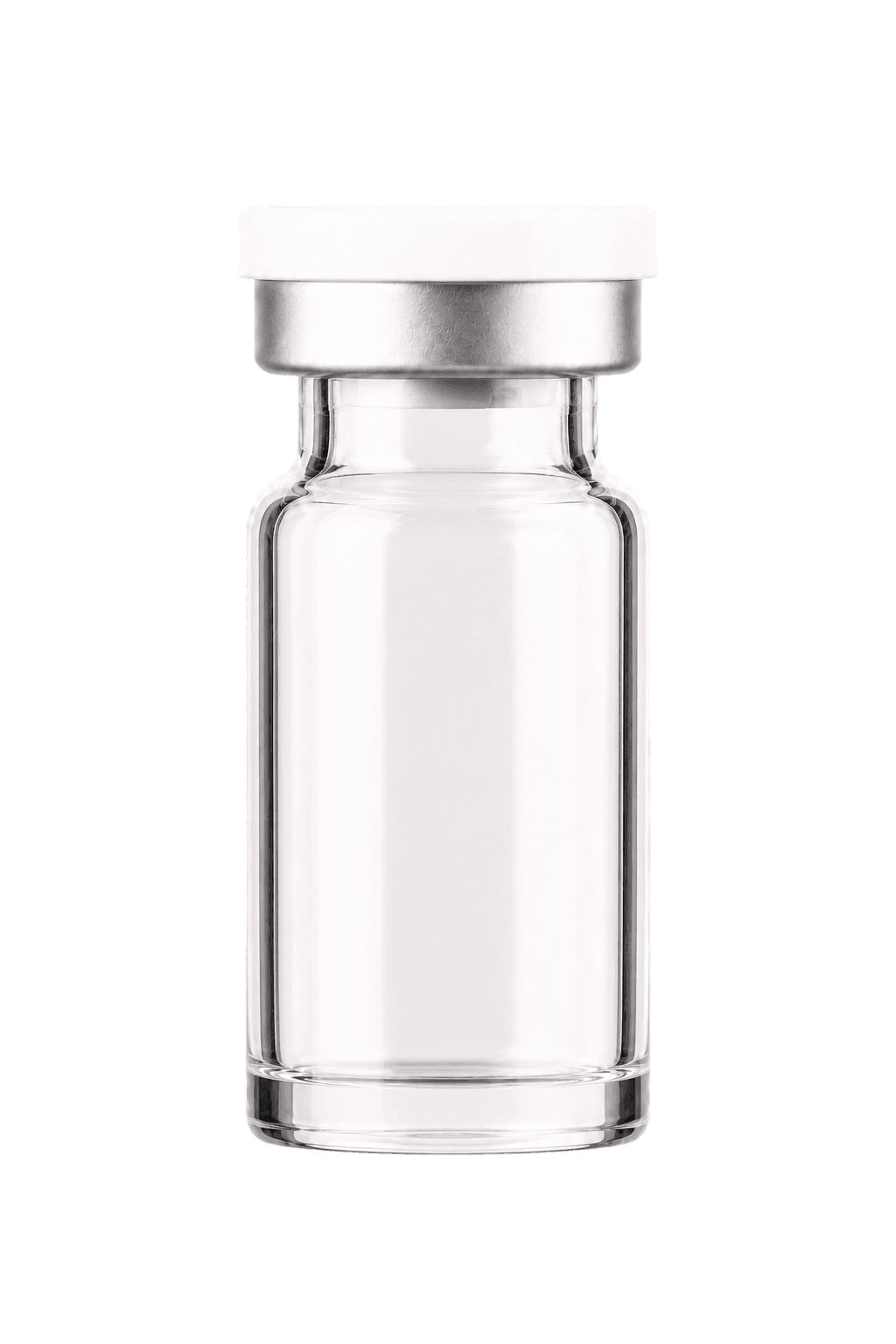
BACTERIOSTATIC WATER
3mL
For Research Use Only
Lot: —
Bulk Peptides Co.
- Third-party tested
- ≥98% HPLC
- COA per lot
Bacteriostatic Water
For Laboratory Research Use Only — Not for Human or Veterinary Use.
Minimum order: 100 vials total. Mix and match across all products.
| CAS Number | — |
|---|---|
| Molecular Formula | — |
| Molecular Weight | — |
| Purity | ≥98% (HPLC) |
| Form | Lyophilized Powder |
| Storage | -20°C, desiccated, protected from light |
| Reconstitution | Bacteriostatic water |
Lot documentation
Every production lot is independently third-party tested. A batch-specific Certificate of Analysis — documenting HPLC purity, mass spectrometry identity confirmation, and net peptide content — is issued with every shipment. View a sample COA to see the format.
Water containing 0.9 percent benzyl alcohol as a bacteriostatic agent. The preservative is not inert: it affects both what can be dissolved in it and how that solution can be measured.
Composition and what bacteriostatic means
This is purified water carrying benzyl alcohol at 0.9 percent by weight, supplied sterile in a sealed multi-use vial. Benzyl alcohol is a small aromatic alcohol that partitions into microbial membranes and inhibits growth at this concentration.
The distinction between bacteriostatic and sterile is worth being exact about, because the two are routinely confused. Sterile means the contents contain no viable organisms at the point of filling. Bacteriostatic means that organisms introduced afterward are inhibited from multiplying. The preservative does not sterilise the vial and does not undo contamination; it makes repeated withdrawal from one vial practicable where plain sterile water would support growth after the first entry.
Nor is the agent bactericidal at this concentration. It suppresses proliferation rather than killing, and its efficacy declines as the vial is depleted and repeatedly entered, which is the reason laboratory practice conventionally dates a vial at first entry and limits how long it stays in use.
Compatibility with peptide and protein preparations
For short synthetic peptides, which make up most of this catalogue, benzyl alcohol at this concentration is generally well tolerated and the preservative is the reason a lyophilised vial can be reconstituted once and sampled repeatedly.
Larger folded proteins are a different case. Benzyl alcohol is an amphiphile that interacts with hydrophobic protein surfaces, and its association with aggregation of folded proteins is documented in the formulation literature. For material whose activity depends on a maintained three-dimensional fold, such as a recombinant protein or a glycoprotein held together by non-covalent subunit association, a preservative-free diluent is the more conservative choice and a compatibility check is worth performing before committing a lot.
There is a related consideration for copper-complexed peptides and thiol-containing compounds, which are sensitive to their solution environment in ways that a simple peptide is not. The diluent should be chosen against the specific chemistry being dissolved rather than by default.
Analytical consequences of the preservative
Benzyl alcohol carries an aromatic ring and therefore absorbs strongly in the low ultraviolet, with significant absorbance in the 250 to 260 nanometre region and a tail extending across the range where peptide bonds and aromatic side chains are measured. At 0.9 percent it is present in vast molar excess over any dissolved peptide.
The practical consequence is that concentration cannot be determined spectrophotometrically for material reconstituted in this diluent. An absorbance reading at 280 nanometres, or at 214 nanometres, is dominated by the preservative rather than by the peptide, and the resulting figure is meaningless. Concentration measurement requires either a preservative-free diluent or a method that separates the components first, such as chromatography with the benzyl alcohol peak identified and excluded.
The same excess interferes with reversed-phase analysis of a reconstituted sample, where benzyl alcohol produces a large peak of its own, and with any assay using a low-ultraviolet detection wavelength.
Handling and storage
| Solubility | Miscible with water in all proportions. Supplied ready to use, requiring no preparation. |
|---|---|
| Reconstitution | Add to the lyophilised solid down the vial wall rather than directly onto the powder, and swirl to dissolve rather than shaking. |
| Storage | Room temperature. Do not freeze. Keep the closure intact and swab it before each entry, since the preservative inhibits growth but does not compensate for a contaminated septum. |
| Stability | Benzyl alcohol oxidises slowly to benzaldehyde and then to benzoic acid, a process accelerated by light, heat and air exposure. An almond-like odour and a falling pH are the practical indicators. Date the vial at first entry and limit the period over which one vial is used. |
For Laboratory Research Use Only — Not for Human or Veterinary Use